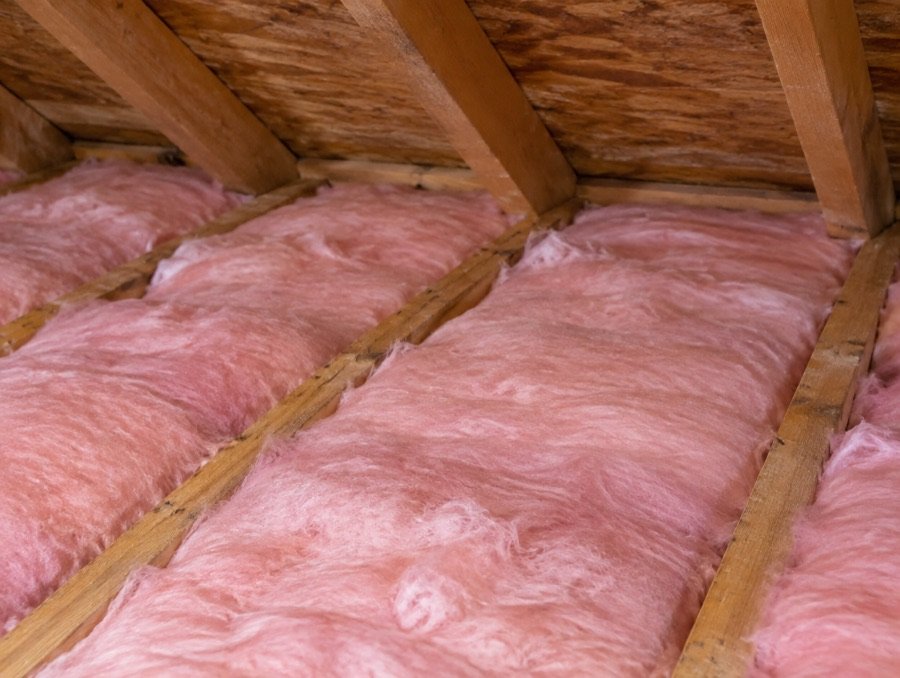
Pick the R-value first
R-value measures resistance to heat flow, so a higher number insulates better. ENERGY STAR publishes recommended levels for adding insulation to existing wood-framed homes, based on the 2021 International Energy Conservation Code. The table below is for the attic floor.
These figures are for a total R-value, existing insulation included. If your attic already has 3 to 4 inches of insulation, ENERGY STAR gives a lower target to reach (shown in the second list).
- Uninsulated attic: zone 1 R-30; zones 2 and 3 R-49; zones 4 to 8 R-60.
- Attic with 3 to 4 inches already: zone 1 R-25; zones 2 and 3 R-38; zones 4 to 8 R-49.
- Find your climate zone on the ENERGY STAR page linked in the sources. Local code or your utility may ask for something different, so check with them before you buy.
How many bags, with the working shown
Owens Corning publishes a coverage chart for its AttiCat blown-in fiberglass. The maximum net coverage per bag falls as the R-value rises, because a higher R-value means a deeper layer: R-19 covers 110.7 sq ft, R-30 covers 68.5 sq ft, R-38 covers 52.6 sq ft, R-49 covers 39.9 sq ft and R-60 covers 31.8 sq ft.
Worked example: an attic floor of 1,000 sq ft. At R-49 that is 1,000 / 39.9 = 25.1, so 26 bags. At R-60 it is 1,000 / 31.8 = 31.4, so 32 bags. At R-30 it is 1,000 / 68.5 = 14.6, so 15 bags. Add about 5 percent for spills and uneven areas (our allowance, not a manufacturer figure) and the R-49 job becomes 27 bags and the R-60 job 34.
Measure the floor area you will actually cover. Subtract the attic hatch, any floored walkway you will not fill, and the areas right at the eaves where baffles keep the vents clear.
How deep is it?
The same chart gives a minimum installed thickness for each R-value: 10.75 inches for R-30, 13.5 inches for R-38, 17 inches for R-49 and 20.5 inches for R-60. If you blow in fewer bags than the chart calls for, the layer will be too shallow for the R-value on the bag. Depth markers placed across the attic before you start make it easy to check as you go.
If you are laying batts instead
Batts are sold by thickness and R-value, so the question is how thick the layer needs to be. The US Department of Energy Building America guide gives R-value per inch for common materials: fiberglass 2.5 to 4, mineral wool 3 to 4, cellulose 3 to 4, EPS foam 3.8 to 4.4, XPS foam 5, polyiso foam 6 to 7.
Divide the target R-value by the R-value per inch. For R-30 in fiberglass at 2.5 to 4 per inch that is 7.5 to 12 inches. The range is wide, so use the R-value printed on the product and the thickness it states, not a rule of thumb.
Common mistakes
- Buying for the R-value of the new layer when the target is a total R-value that includes what is already there.
- Using a coverage figure from a different product. Each manufacturer has its own chart; the numbers here are for Owens Corning AttiCat.
- Blocking soffit vents. Baffles at the eaves keep air moving under the roof deck.
- Working without a respirator, gloves and eye protection. Fiberglass fibers irritate skin, eyes and lungs.
How many bags for common attic sizes
Each row uses the Owens Corning AttiCat coverage chart and 5% extra. The right target depends on your climate zone: see the insulation calculator to change any number.
| Attic floor | R-30 bags | R-49 bags | R-60 bags |
|---|---|---|---|
| 800 sq ft attic | 13 | 22 | 27 |
| 1000 sq ft attic | 16 | 27 | 34 |
| 1200 sq ft attic | 19 | 32 | 40 |
| 1500 sq ft attic | 23 | 40 | 50 |
| 2000 sq ft attic | 31 | 53 | 67 |
Frequently asked questions
What R-value do I need in my attic?
ENERGY STAR recommends R-30 for an uninsulated attic in climate zone 1, R-49 in zones 2 and 3, and R-60 in zones 4 to 8. With 3 to 4 inches already in place the targets are R-25, R-38 and R-49. Local code may differ.
How many bags of blown-in insulation per 1,000 square feet?
For Owens Corning AttiCat: about 15 bags at R-30, 25 to 26 at R-49 and 31 to 32 at R-60. The chart lists bags per 1,000 sq ft of 14.6 at R-30, 25 at R-49 and 31.5 at R-60.
Does the number of bags depend on the brand?
Yes. Coverage per bag is set by each manufacturer's chart for its own product. Use the chart for the bag you are buying.
Can I add new insulation over old?
ENERGY STAR's retrofit table assumes you add to existing insulation to reach a total R-value. Keep the old layer dry and not compressed, and check the product instructions for the type you are adding.
Is this advice for walls or floors?
No. The calculator and these figures are for attic floors with blown-in fiberglass. ENERGY STAR gives floor targets too (R-13 to R-38 by zone), but wall guidance on that page is text only.
Sources: ENERGY STAR: Recommended Home Insulation R-Values, Owens Corning AttiCat coverage chart, US DOE Building America: Basement Insulation Basics (R-value per inch). Read 7 November 2026.
What you will also need for insulation
Tools and supplies that go with this job. These are Amazon search links, so you can compare options and current prices there.
- Tape measure
- Respirator rated for fiberglass dust
- Safety glasses
- Disposable coveralls
- Work gloves
- Attic insulation depth rulers
As an Amazon Associate I earn from qualifying purchases. These are paid links and cost you nothing extra.